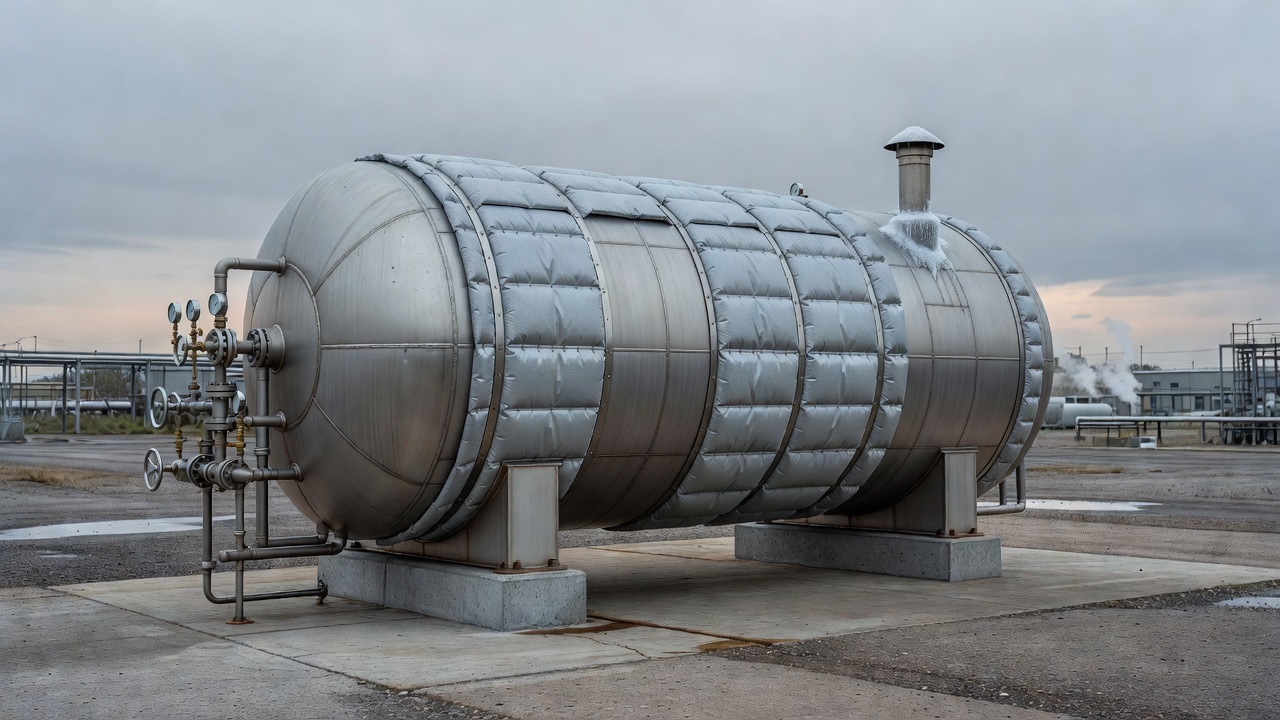
Liquid hydrogen is hydrogen maintained as a cryogenic liquid. Compared with gaseous storage, this changes the vessel, insulation, handling interfaces and energy picture. Liquefaction is energy-intensive, and maintaining a cryogenic condition creates continuing design and operational considerations. A facility assessment therefore needs to consider the pathway from production through liquefaction, storage and eventual use, rather than judging the storage vessel in isolation.
Why the cold boundary matters
Cryogenic systems depend on equipment designed for very low temperatures and on materials, joints and instrumentation appropriate to the intended service. Insulation reduces heat transfer but does not eliminate it. Heat entering the system can influence pressure and boil-off management, while the details of any resulting process response depend on the plant design. General descriptions should not be mistaken for instructions on operating or venting equipment.
Vessel design may include inner and outer boundaries, insulation spaces and features intended to manage thermal and pressure conditions. Actual configurations differ by purpose, scale and applicable requirements. A site diagram should make clear which components belong to the liquid storage system, how associated gas streams are managed, and where interfaces connect with liquefaction, transfer or consumption equipment.
Energy and logistics
Producing liquid hydrogen requires additional processing compared with storing gas without liquefaction. That process consumes energy and influences lifecycle efficiency and cost. Delivery logistics may also differ: cryogenic transport equipment, transfer connections and receiving arrangements must be considered as a linked chain. A comparison that notes only the physical volume of a stored product can omit the energy and equipment required to create and maintain that state.
Liquid storage can be relevant to some transport and industrial supply chains where the properties of the product and logistics favour a cryogenic pathway. It is not automatically the best choice at every scale or location. Planners can compare options by defining the service required, the distance and frequency of transport, the receiving conditions, the site's energy context and the evidence available for each assumed performance measure.
Facility interfaces and site context
Connections to consider include product receipt, transfer, isolation, measurement, instrumentation, thermal management and delivery to downstream equipment. Supporting utilities and control systems are part of the facility story too. At the site boundary, access routes, emergency arrangements, neighbouring uses and clear lines of responsibility should be visible in the project's documentation. These are not details that can be inferred simply from an image of a tank.
Specialist planning should address hazards associated with cryogenic temperatures and hydrogen properties in the context of the complete installation. The appropriate methods and safeguards depend on the detailed design and local regulatory framework. Public-facing explanations should state the limits of available information and avoid implying that a generic diagram guarantees safety.
Comparing approaches fairly
A wrapped comparison can help keep assumptions explicit:
| Question | Why it matters |
|---|---|
| What state is stored? | Defines the containment and conditioning context. |
| What energy is required? | Includes upstream processing and site services. |
| How is it delivered? | Connects transport equipment to facility interfaces. |
| What is the use pattern? | Shapes inventory, turnover and dispatch assumptions. |
This matrix is a framework for questions, not a technology ranking. Projects need consistent units and clearly stated boundaries before options can be compared. A source's performance data should be checked for its stated conditions, date, system boundary and intended application.
Standards and evidence
Relevant references may include ISO/TR 15916 for basic hydrogen-system safety considerations, applicable pressure-equipment rules, national fire and building provisions, and sector-specific requirements. Codes for hydrogen fuelling stations, including ISO 19880-1, have a defined subject and should not be assumed to govern every storage plant. NFPA 2 and European Industrial Gases Association publications may also inform understanding in applicable contexts. Project teams establish which editions and requirements apply.
The most useful facility account joins process diagrams, equipment descriptions, energy assumptions, transfer arrangements and safety documentation. It identifies confirmed information separately from projections and explains where approvals or reviews remain outstanding. This dossier does not provide certification or operating advice. Its purpose is to make the cold-storage system legible: the vessel is important, but the complete energy and interface chain determines what the installation means in practice.