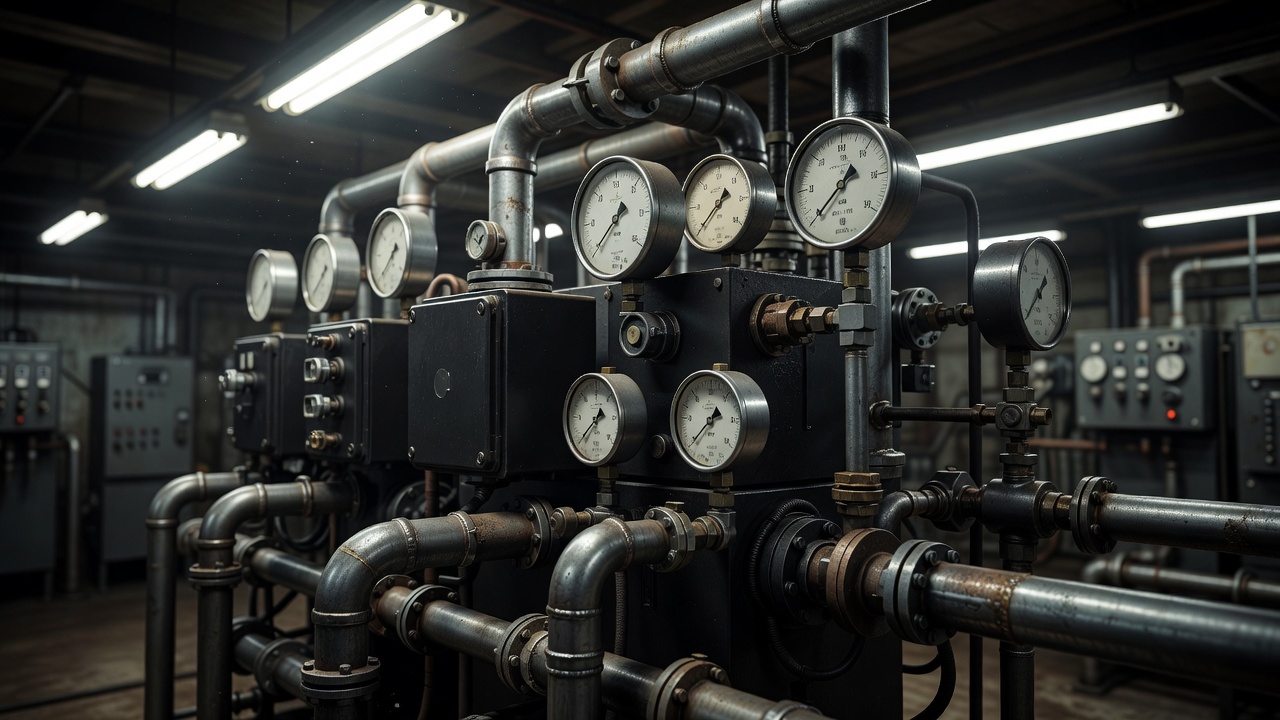
Hydrogen storage safety is not a single device, label or checklist. It is an integrated approach to understanding hazards, designing appropriate safeguards, providing reliable information and maintaining competent oversight. Monitoring can contribute to that system, but it cannot compensate for an unclear boundary, unsuitable design, poor maintenance or missing emergency coordination.
Begin with context and hazards
Hydrogen's properties and the physical state in which it is stored influence facility design. Pressure, temperature, materials, potential release routes, ignition sources, occupied areas and surrounding land uses may all be relevant. The exact hazards and safeguards depend on the site and its process. A general article cannot perform a hazard assessment or establish a safe separation distance.
A clear project account describes the facility boundary, the systems connected to it and the assumptions used to assess risk. It can distinguish the storage area from production, transport and end-use equipment while also showing where their interfaces create shared dependencies. Readers should be able to identify what the project documents cover, what remains outside their scope and which specialist reviews have taken place.
Monitoring has a defined role
Instrumentation can provide information about process conditions, equipment status or other selected variables. Control and alarm arrangements may support decisions made by trained personnel and engineered systems. The specific sensors, locations, performance requirements and response arrangements must be established by the project design and applicable rules. Listing a detector or control system without explaining its function, coverage and dependencies is not enough to describe the safety case.
Monitoring systems themselves need suitable design, testing, maintenance and management of change. Their availability may depend on power, communications, configuration and the condition of supporting equipment. A robust description recognises both capability and limitations. It should not suggest that sensing alone prevents every event, nor should it present generic operating responses as advice for an actual plant.
Layers of assurance
Safety planning commonly draws on multiple kinds of evidence: engineering design, hazard analysis, equipment conformity, inspection and maintenance arrangements, competency, management procedures and emergency planning. The relevant combination differs by facility and jurisdiction. Each element addresses a portion of the overall picture; confidence comes from how well they fit together and how their assumptions are kept current.
Codes and standards have a scope. ISO/TR 15916 provides basic considerations for the safety of hydrogen systems; ISO 19880-1 covers gaseous hydrogen fuelling stations. NFPA 2 is a hydrogen technologies code applicable in the relevant context. Pressure equipment requirements, including the European Pressure Equipment Directive 2014/68/EU where applicable, concern defined equipment and conditions. None of these references should be presented as a universal approval for every hydrogen storage facility.
Regulators, guidance and requirements
Guidance helps explain good practice and relevant considerations. A legal requirement is different: it applies through legislation, regulation or an authority's decision within a particular jurisdiction. Industry publications, such as European Industrial Gases Association guidance, may inform practice without replacing statutory obligations. Project documentation should distinguish adopted requirements from informative references and identify the editions relied upon.
For UK readers, Health and Safety Executive material can offer context on relevant topics, while planning and environmental decisions may involve other public bodies. In Europe, rules and national implementation can differ between member states. International sources such as IEA, IRENA, DNV, NREL and Sandia research provide valuable background but do not approve individual installations. Verify each source's date, geographical scope and purpose.
People, communication and change
Safety arrangements extend beyond the equipment fence. Emergency services, site neighbours, transport providers and downstream customers may need clear information about relevant interfaces and responsibilities. Good communication states what is known and what is not, avoids unsupported assurances and directs technical questions to the responsible project parties. Public summaries can be accessible without disclosing sensitive security information or oversimplifying important caveats.
Facilities can change over time. Equipment may be replaced, operating patterns may shift, and supply routes or nearby development may evolve. Management of change and periodic review help keep assumptions aligned with reality. Records of inspection, maintenance, training and assurance support continuity, but their detailed implementation remains the responsibility of the facility's competent operators and relevant authorities.
Reading a safety claim
When a proposal uses broad language such as “safe by design” or “fully compliant,” ask what evidence, boundary and jurisdiction the wording refers to. Is there a defined facility scope? Are the cited standards applicable to the equipment and use? Are approvals current or still pending? What independent or regulatory review has occurred? These questions do not replace expert assessment; they help readers understand the basis and limits of a claim.
This dossier offers explanation, not certification, operating instructions or project approval. A site-specific evaluation belongs to qualified professionals and the authorities with relevant responsibilities. Treat safety as a system of context, design, monitoring, maintenance, competence and communication—and assess the evidence across that whole system.